Connect with us

World News

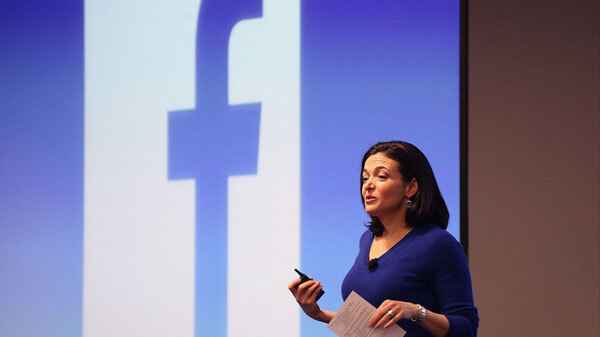
Sheryl Sandberg, Facebook’s long-serving second-in-command, has resigned.

Published

on

sheryl sandberg meta coo resigns 1654157447

Hemant Singh – Mumbai Uncensored, 3rd June 2022

Sandberg, 52, was one of Silicon Valley’s most powerful women, and her exit comes as the social media behemoth confronts a bleak future and severe competition.

Sheryl Sandberg, Meta’s second-in-command, is stepping down after helping the firm develop from a startup to a digital advertising powerhouse but also bearing responsibility for some of the company’s most severe mistakes.

Sandberg has served as the company’s chief operating officer for the past 14 years. She started working for Google four years before the firm went public, in 2008.

“When I took this job in 2008, I hoped I would be in this role for five years.” Fourteen years later, it is time for me to write the next chapter of my life, “Sandberg wrote on her Facebook page Wednesday.

Sandberg was in charge of Facebook’s (now Meta) advertising company, which he helped build from a startup to a $100 billion-a-year monster. Following allegations that some of her business choices for Facebook led to the spread of disinformation and hate speech, Sandberg, the company’s second most well-known face behind CEO Mark Zuckerberg, has become a polarising figure.

Despite being one of the most influential female executives in the internet business, she was constantly scolded for not doing enough for women and others hurt by Facebook’s products. Her public-speaking abilities, as well as her seeming ease in linking the worlds of technology, commerce, and politics, contrHis politicsarply with Zuckerberg’s, particularly in the early days of Facebook. On the other hand, Zuckerberg has been catching up, in part to prepare for impending senate investigations in which he will defend Facebook’s activities.

Neither Sandberg nor Zuckerberg stated that Sandberg’s decision to resign was a result of her own free will. However, in recent years, other close allies of Zuckerberg, including as Chris Cox, who returned to the company in 2020 as chief product officer after a year away, have been more conspicuous.

“Sheryl Sandberg had an enormous impact on Facebook, Meta, and the broader business world.” “She helped Facebook build a world-class ad-buying platform and develop groundbreaking ad formats,” said Debra Aho Williamson, an analyst at Insider Intelligence. But she added that Facebook faced “huge scandals” under Sandberg’s watch—including the 2016 U.S. presidential election, the Cambridge Analytica privacy debacle in 2018, and the 2021 riot at the U.S. Capitol.

And now, Meta is “facing a slowdown in user growth and ad revenue that is now testing the business foundation that the company was built on,” she said. “The company needs to find a new way forward, and perhaps this was the best time for Sandberg to depart.”

Sandberg will leave Meta in the autumn but will remain on the board of directors.

Javier Olivan, who presently supervises important activities at Meta’s four primary applications — Facebook, Instagram, WhatsApp, and Messenger — will serve as Meta’s new COO, according to Zuckerberg’s own Facebook post. But it will not be the same role Sandberg has held for the previous 14 years.

“It will be a more traditional COO role where Javi will be focused internally and operationally, building on his strong track record of making our execution more efficient and rigorous,” Zuckerberg wrote.

Sandberg has long been Zuckerberg’s No. 2, even sitting next to him in the company’s Menlo Park, California, headquarters — at least before the pandemic — but she also had a very public-facing job, meeting with lawmakers, holding focus groups, and speaking out on issues like women in the workplace and, most recently, abortion.

“I think Meta has reached the point where it makes sense for our product and business groups to be more closely integrated, rather than having all the business and operations functions organized separately from our products,” Zuckerberg wrote.

Sandberg, who lost her husband, Dave Goldberg, suddenly in 2015, said she is “not entirely sure what the future will bring.”

But she wrote, “I know it will include focusing more on my foundation and philanthropic work, which is more important to me than ever given how critical this moment is for women.” She also mentioned that she is tying the knot this season and that raising their five kids will be an aspect of their life.

The grown-up in the room

Sandberg, now 52, was one of the first to help Google create what would become the internet’s largest—and most profitable—advertising network. She left that position, however, to take on the challenge of turning Facebook’s freewheeling. He turned the network into a profitable corporation while simultaneously mentoring Zuckerberg, who was 23 at the time.

She proved to be just what the firm and the then-immature Zuckerberg needed at the appropriate moment, paving the way for Facebook’s much-anticipated first public offering of shares a decade ago.

Sandberg became the engine of a corporation fuelled by a quickly rising digital ad business that has grown almost as successful as the one she helped piece together around Google’s dominating search engine, while Zuckerberg remained the company’s visionary and controlling shareholder.

Facebook’s business, like Google’s, has thrived on its ability to keep its users coming back for more of its free services while leveraging its social networking technology to learn more about people’s interests, habits, and whereabouts—a nosy model that has repeatedly entangled the corporation in discussions about how a right to individual privacy still remains in a progressively digital world.

Sandberg has been looked up as an inspiration for working women as one of the top female executives in technology, a role she seemed to embrace with her best-selling 2013 book “Lean In: Women, Work, and the Will to Lead.”

However, “Lean In” was met with quick backlash. Sandberg has been dubbed a “PowerPoint Pied Piper in Prada ankle boots” by New York Times writer Maureen Dowd, and some have said she is the inappropriate person to head a women’s movement.

In a subsequent book on the husband’s death, Dave Goldberg, she addressed some of the criticism. Goldberg became a symbol of agonising sadness in 2015 when she died in a car accident while working out on vacation, leaving her widowed with two children while continuing to assist in operating one of the world’s most well-known enterprises.

Cracks in the outside

Sandberg has been a contentious figure in recent years, following allegations that some of her business choices for Facebook contributed to the spread of disinformation and hate speech. Critics and a business whistleblower claim that the effects have harmed democracy and created serious emotional difficulties for teenagers, especially girls.

Sandberg, according to Shoshana Zuboff, author of “The Age of Surveillance Capitalism,” is as much to blame as anybody for one of Big Tech’s most sinister inventions: the collecting and aggregation of data on social media users’ behaviour and preferences. Facebook has been sharing user data with marketers and business partners for years.

Zuboff wrote, “through the artful manipulation of Facebook’s culture of intimacy and sharing.”

Sandberg is dubbed the “Typhoid Mary” of surveillance capitalism by Zuboff, who refers to the benefiting off the gathering of data from social media users’ online activity, tastes, external data, and connections as “typhoid Mary.”

“Sheryl Sandberg may consider oneself a feminist, but her decisions at Meta made social media platforms less safe for women, people of colour, and even threatened the American electoral system,” said Shaunna Thomas, co-founder of UltraViolet, a gender justice advocacy group that has been calling for Sandberg’s resignation.

Sandberg has made various public gaffes at Facebook, like attempting to blame the insurgency at the US Capitol on Facebook on January 6, 2021. She stated the activities of the day were “primarily organised on platforms that don’t have our capacity to block hatred, don’t have our standards, and don’t have our transparency” in a Reuters interview later that month.

Internal emails released later that year by whistleblower Frances Haugen revealed that Facebook’s own workers were concerned about the company’s sluggish and frequently reversed response to escalating radicalism in the United States, which culminated in the events of Jan. 6.

At the height of the chaos on Jan. 6, one employee posted on an internal message board, “Haven’t we had enough time to find out how to moderate conversation without supporting violence?” “We’ve been putting fuel on this fire for a long time, so it’s no wonder that it’s now out of control.”

World News

Trump Brokers Fragile Ceasefire Between Israel and Iran; India Navigates Diplomatic Crossroads

Published

on

ceasefire 1

In a dramatic turn of events, former U.S. President Donald Trump announced he had brokered a ceasefire between Israel and Iran following nearly two weeks of escalating military conflict. The announcement came after a series of U.S.-assisted Israeli airstrikes targeting Iranian nuclear facilities. While the strikes reportedly set Iran’s enrichment capability back by a few months, both nations claimed limited damage and victory. Trump’s move to publicly declare peace has stirred both praise and criticism on the global stage, especially as skirmishes have continued sporadically despite the ceasefire.

For India, the implications of the de-escalation are wide-ranging and complex. As a nation heavily reliant on West Asian oil and a major stakeholder in regional infrastructure corridors, India has welcomed the ceasefire cautiously but remains alert. The Indian government, consistent with its longstanding diplomatic neutrality in Middle Eastern affairs, avoided direct commentary on either nation’s military actions but reiterated its call for regional peace and restraint.

Strategically, the ceasefire offers India a short-term relief in crude oil market volatility. Earlier fears of oil price spikes and disrupted shipping through the Strait of Hormuz had already triggered conversations about contingency energy sourcing. With tensions momentarily defused, India hopes to preserve price stability and avoid further strain on its import-dependent economy.

India’s other key concern lies in regional trade infrastructure. The India–Middle East–Europe Economic Corridor (IMEC), touted as a counter to China’s Belt and Road Initiative, depends on stable Middle Eastern partners. Any renewed conflict could stall or even derail portions of this project, particularly if Iran were to reactivate proxy conflicts through Iraq or Syria.

On the intelligence front, India is closely monitoring fallout from Trump’s public disclosures related to the strikes. Sensitive operational leaks have reportedly irked U.S. allies, raising broader concerns about the handling of strategic information. With India deepening its intelligence ties with both Israel and the U.S., preserving trust within these networks is paramount.

In the long run, India’s approach will remain pragmatic: focused on de-risking its energy lifelines, safeguarding its economic corridors, and maintaining careful neutrality in one of the world’s most volatile geopolitical theatres.

Continue Reading

World News

India and Malaysia Elevate Bilateral Ties to Comprehensive Strategic Partnership

Published

on

pm modi 200305214

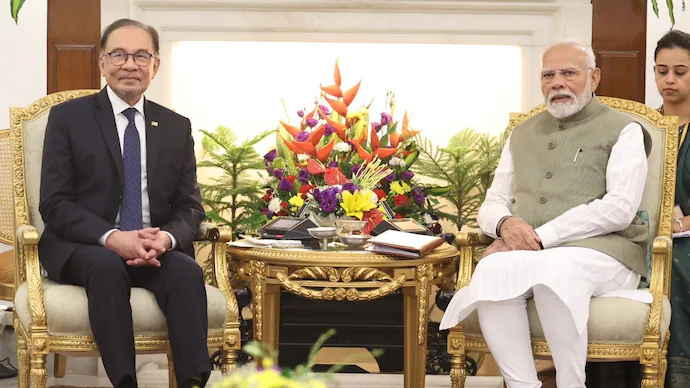
In a significant diplomatic development, India and Malaysia have decided to elevate their bilateral relationship to a Comprehensive Strategic Partnership following high-level talks between Indian Prime Minister Narendra Modi and Malaysian Prime Minister Anwar Ibrahim. The decision was formalized during a three-day visit by Prime Minister Ibrahim to India, marking his first official visit to the country since taking office.

Ceremonial Welcome at Rashtrapati Bhavan:

Prime Minister Narendra Modi warmly welcomed his Malaysian counterpart at Rashtrapati Bhavan on Tuesday, where a ceremonial reception was held in his honor. The two leaders then engaged in extensive discussions aimed at deepening cooperation across a broad spectrum of areas, particularly in trade, investment, and emerging technologies.

Key Agreements and Areas of Cooperation:

A series of bilateral agreements were signed, including a crucial pact on the employment and repatriation of workers and another focusing on boosting cooperation in digital technologies. The agreements are seen as vital steps in fostering closer economic ties between the two nations.

One of the most notable outcomes of the talks was the decision to work towards linking India’s Unified Payments Interface (UPI) with Malaysia’s PayNet system, which is expected to facilitate smoother financial transactions and further integrate the two economies.

Focus on Trade, Investment, and Defense:

Expanding trade and investment was a major focus of the Modi-Ibrahim talks. Prime Minister Modi highlighted the untapped potential in the economic relationship between India and Malaysia, particularly in new and emerging sectors. The leaders also discussed the timely review of the free trade agreement between India and the Association of Southeast Asian Nations (ASEAN), of which Malaysia is a key member.

In addition to economic cooperation, the two sides explored new possibilities in the defense sector, reflecting a mutual interest in enhancing security collaboration. The leaders also reaffirmed their shared commitment to combating terrorism and extremism, emphasizing the importance of peace and stability in the Indo-Pacific region.

Commitment to Regional Stability:

Prime Minister Modi underscored India’s commitment to the principles of freedom of navigation and overflight in accordance with international law, a statement that appeared to address the ongoing disputes in the South China Sea. Both leaders expressed their preference for resolving disputes peacefully, further reinforcing their commitment to regional stability.

Strengthening ASEAN-India Ties:

Modi also described Malaysia as a critical partner for India within the ASEAN and Indo-Pacific frameworks. The discussions between the two leaders reinforced the strategic importance of the ASEAN-India relationship and the need for timely updates to the existing free trade agreement to better reflect the current economic realities.

Conclusion:

The elevation of India-Malaysia ties to a Comprehensive Strategic Partnership marks a new chapter in the relationship between the two countries. With agreements on key issues such as digital cooperation and worker repatriation, along with a shared vision for regional stability, the visit of Prime Minister Anwar Ibrahim has set the stage for deeper and more comprehensive collaboration in the years to come.

Continue Reading

World News

Behind the Headlines: Understanding the Challenges of the Israel-Palestine Two-State Proposal

Published

on

SR 23.09.26 Israel peace feature

Manak Sharma, Mumbai Uncensored, 28th November, 2023:

THE TWO-STATE SOLUTION

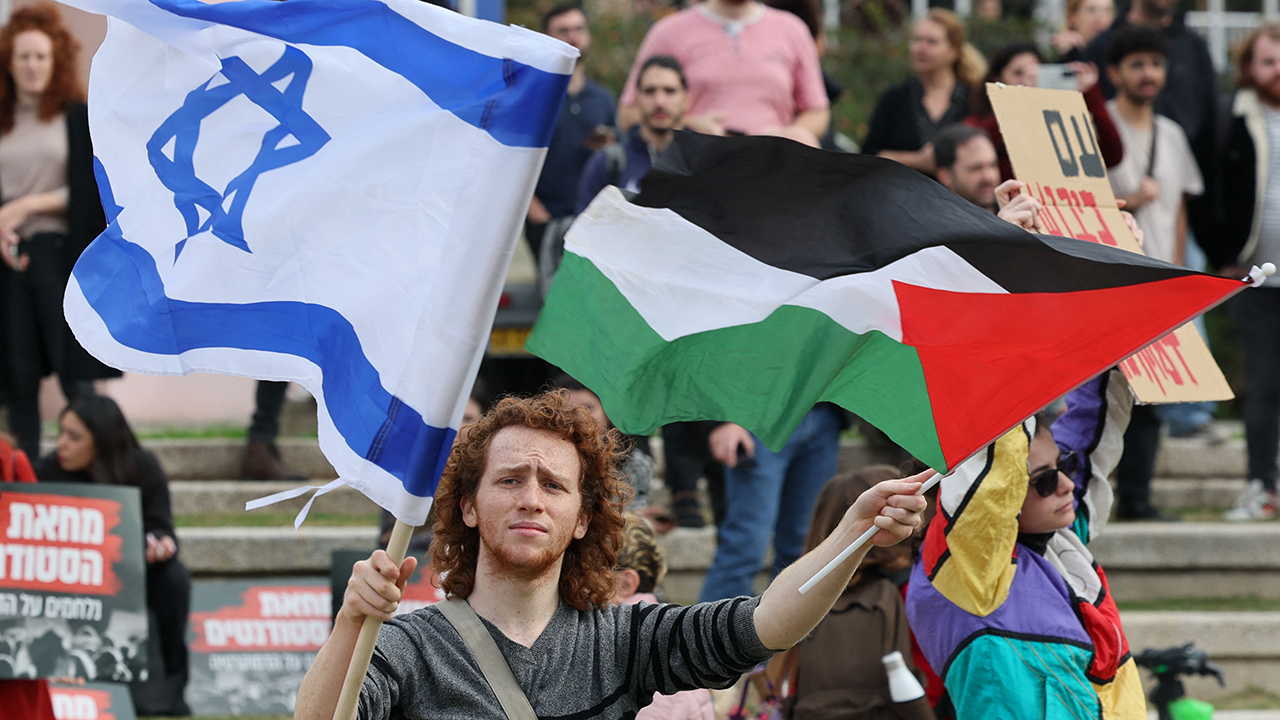
The two-state solution is believed to be the only possible way to end the conflict between Israel and Palestine. The solution proposes two separate states, Israel for the Jewish people and Palestine (including both Gaza and West Bank) for the Palestinian people. The solution is designed on the basis that both the states have the legal right to decide their own destiny in the international order. Both Israel and Palestine will share Jerusalem as their capital city. The border between the two states will be based upon the 1967 border before the third Arab-Israel war. In a fair and equitable manner, Palestinian refugees settled in different parts of the world will be allowed to return.

Since 1947, the United Nations has stated the two-state solution as its official policy but it has failed to be implemented and the Israel-Palestine conflict continues. Many countries around the world have endorsed the two-state solution including Qatar which is mediating between Hamas and Israel.

PROBLEMS IN IMPLEMENTATION

There are mainly three reasons why the two-state solution has failed to be implemented. First, both countries do not agree on the border of Palestine in future. Second, with the Israeli government building settlements continuously in occupied Palestinian territories, it becomes difficult to create a Palestinian state which will share the border with Israel. Third, the two-state solution does not clarify how the millions of Palestinian refugees living all around the world will be able to return to their country. Palestinian authorities will not agree to any solution which fails to address the issue of Palestinian refugees returning home.

CONCLUSION

The two-state solution might be complex and difficult to achieve but it is the only viable option to establish peace in the region and end the conflict which is causing hundreds of casualties daily since Hamas attacked Israel on October 7th this year.  The international community rather than instigating the war further, needs to mediate between the two countries encouraging them to make necessary compromises and agree on the two-state solution.  The two countries reaching a solution seems difficult but the four-day truce which will make both the IDF and Hamas return civilians taken as captives shows a ray of hope that the Israeli government and Hamas will agree to some deal and stop the war in near future.

Continue Reading

Trending